On the roadIbiza
Buggy and 4x4 hire for the dirt tracks of the north
Apr–Oct
The reason people rent a buggy on this island is that an ordinary hire car contract forbids the roads they want to use. North of Sant Joan the surfaced network runs out and a dirt network takes over. What each vehicle handles, which tracks are private, and the fire rule that matters more than any of it.
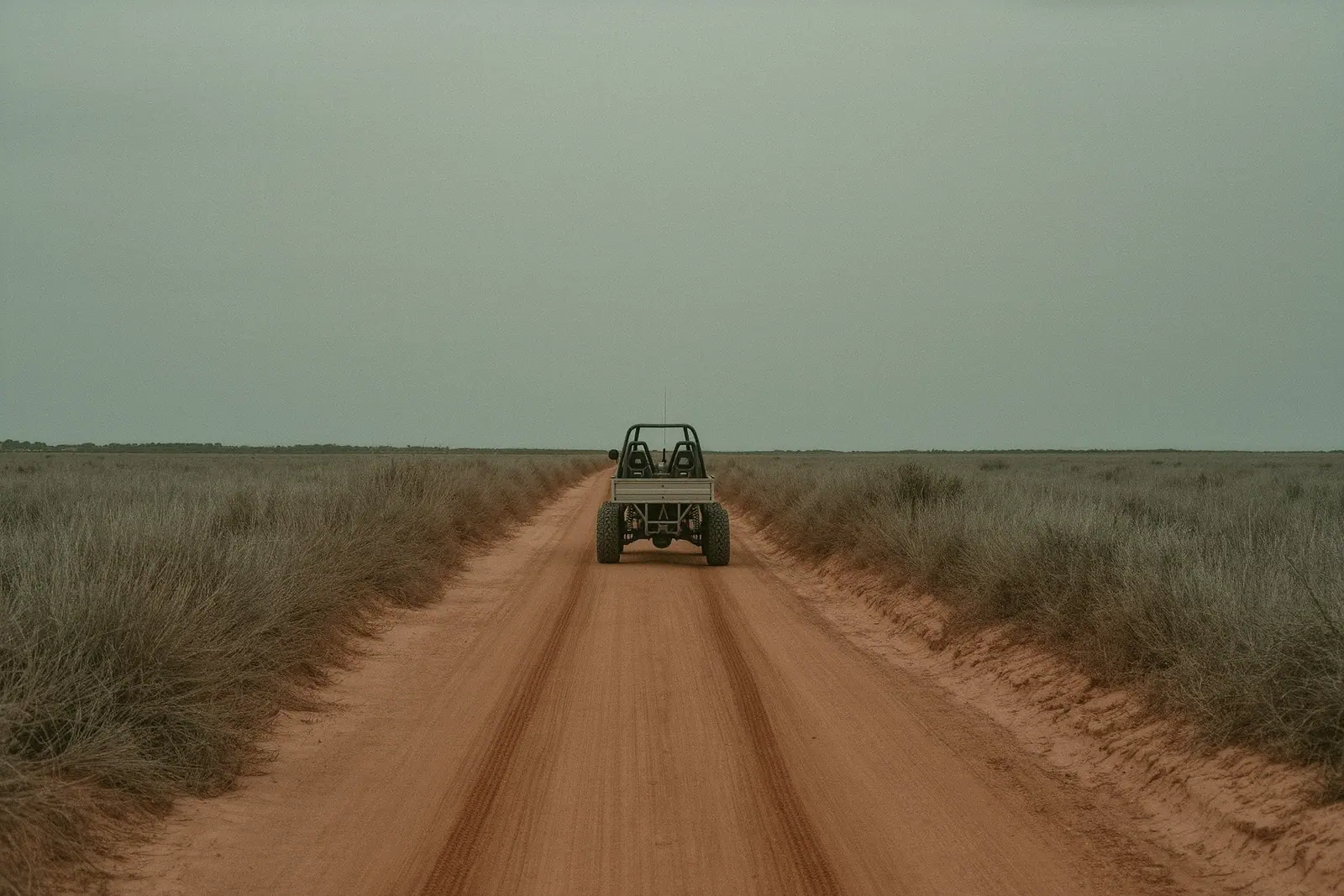
Drive north from Sant Joan de Labritja and the map starts lying to you. Lines that look like roads become compacted red earth between dry stone walls, then narrow, then fork three ways at an unsigned junction beside a carob tree. This is most of the north of Ibiza. The surfaced network is thin, and the tracks that connect the coast to the villages are older than the tarmac.
An ordinary hire car will physically drive most of it. Your contract says it may not, and that clause is the actual reason the buggy and 4x4 category exists here.
Four vehicles, and what each one is really for
| Vehicle | Handles dirt | Locks | On the dual carriageway | Sensible for |
|---|---|---|---|---|
| Small hatchback | Not per the contract | Yes | Fine | Everything except the tracks |
| Compact soft-roader | Yes, if permitted in writing | Yes | Fine | A week that mixes towns and tracks |
| Proper 4x4 | Yes, including after rain | Yes | Fine, thirsty | Villa in the campo up a bad drive |
| Open buggy | Yes, noisily | No storage at all | Slow and loud | Two people, one day, no luggage |
The column that decides most people’s answer is the third one. A buggy is an entertaining thing to drive on a track and a poor thing to drive for the forty-five minutes it takes to reach the north from the airport side of the island on main roads. If your accommodation is in the south, you will spend more of the hire on the way there than on the tracks.
Where the tracks actually go
The useful ones cluster in the northern third:
- Around Sant Miquel and Sant Mateu, through vineyard and terraced almond, with the track network dropping towards the cliffs at Cap Rubió.
- Santa Agnès and the plain behind it, flat almond country that is spectacular in February and dusty in August.
- Behind Sant Joan, the camins linking the hamlets and running out towards the headlands.
- Down to Cala d’en Serra, a genuinely rough descent that gets worse each season.
- Up Sa Talaia above Sant Josep, the highest ground on the island, which is surfaced most of the way and then not.
What none of these gets you is a secret cove with a car park at the bottom. The coves at the end of the worst tracks are small, have no facilities and often no shade, and several of them are far easier to reach by water in a small boat.
Where you may not drive
Three separate restrictions, and none of them is advisory.
Private land. A very large share of the Ibizan countryside is privately owned, and the camins crossing it are farm accesses with a right of way for the owner and nobody else. A chain, a gate or a hand-painted sign means what it says. Turning a vehicle round in someone’s terraces is how the local mood about this category of rental got to where it is.
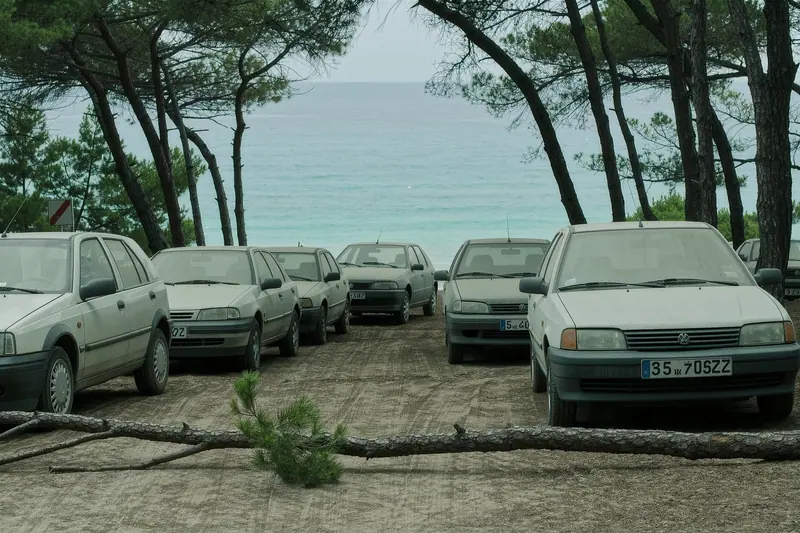
Protected ground. Driving off any track inside protected pine forest or a natural park area is prohibited. That includes parking a wheel on the verge to let someone past on soft ground, and it includes the dunes behind the southern beaches.
Fire. From late spring the island is tinder, and a hot exhaust or a catalytic converter parked over dry grass is a genuine ignition source. There are seasonal restrictions on activity in wooded areas and there is a reason for them. Park on bare earth or stone, never on stubble, and take the cigarette rule seriously.
The buggy question, honestly
They are fun for about ninety minutes. After that: no shade, no doors, no boot, nowhere to lock a bag while you swim, dust from every vehicle in front of you, and a noise level that makes conversation impossible and makes you unpopular in every village you pass through. Several councils in the north have moved to restrict where and when they may be used, in response to exactly that.
If you want one, take it for a single day rather than a week, start early, and plan a loop that keeps you off main roads. If what you actually want is to reach one rough track down to a villa or a cove, a compact soft-roader with written permission for unsurfaced roads does the job with a boot, a roof and air conditioning.
A day that works
- Collect early — before nine — and get the main-road leg done in the cool.
- Up through Santa Gertrudis and Sant Miquel, then onto the tracks behind Sant Mateu. Two hours of slow driving with the almond terraces open around you.
- Down to the north coast for a swim, parking on hard ground and walking the last part rather than trying to drive it.
- Lunch in one of the northern villages, in the shade, while the day peaks.
- Back along the surfaced road — the route north to Portinatx and its driving conditions is the pleasant way home — arriving before the light goes. Open vehicles and unlit rural roads after dark are a poor combination.
The one thing to fix before you book: get the unsurfaced-road permission in writing, on the contract, with the vehicle registration on the same page. A verbal yes at the desk is worth nothing when the invoice for a cracked sump arrives three weeks later, and it is the same problem people hit parking at the busier calas with an ordinary car.
What to check before you book
- Ask in writing whether unsurfaced roads are permitted. On a standard hire car the answer is almost always no, and that is the whole reason for the category.
- Get the vehicle class from the registration document, not from the website. A buggy may be a quadricycle rather than a car, and the licence and helmet rules differ.
- Ask what the excess is on tyres, underside, windscreen and paintwork, because those are the four that dirt tracks damage.
- Check whether there is any lockable storage at all. On most open buggies there is none, which decides what you can do with your day.
- Confirm whether the vehicle may be taken on the dual carriageway between Ibiza town and Sant Antoni, and how long that leg takes at its top speed.
- Verify current municipal restrictions on where and when these vehicles may be driven, because several councils have tightened them.
Questions people actually ask
- Do I need a special licence for a buggy on Ibiza?
Usually an ordinary car licence is enough, but it depends on how the vehicle is registered. Some open buggies are classified as quadricycles rather than cars, which changes the licence class, the minimum age and sometimes whether helmets are required. Ask to see the registration document and confirm the requirement with the operator and the traffic authority rather than assuming.
- Can I take a normal hire car down a dirt track?
The track will usually let you. The contract will not. Nearly every rental agreement on the island excludes unsurfaced roads, which means that a punctured sidewall, a scraped sump or a stone through the radiator is entirely yours, excess or no excess. This is the single most expensive misunderstanding in Ibizan car hire.
- Is a 4x4 actually necessary in the north?
Rarely, in dry weather. Most of the tracks people want are compacted earth and stone that a normal car would handle if it were allowed to. What you are really renting is permission plus ground clearance. After heavy rain, which does happen in spring and autumn, the same tracks turn to rutted clay and the four-wheel drive stops being decorative.
- Are buggies allowed everywhere?
No, and the position has been tightening. Councils in the north have responded to noise and dust complaints, and driving off the track anywhere in protected pine forest or inside a natural park is prohibited outright. Many of the tracks that look public on a map are private farm accesses. Check the current municipal rules before you book a tour or a day.
- What does it cost?
A buggy typically runs from around a hundred euros a day in the shoulder months to two or three times that in the first three weeks of August, which is more than a small car and considerably less than a proper 4x4. Deposits are higher than for a hatchback because the damage profile is worse, and fuel consumption on an open buggy is poor for the size.