On the waterIbiza
Renting a speedboat in Sant Antoni
May–Oct
Sant Antoni is the easiest place on Ibiza to walk up and rent a fast open boat, and the hardest place to hand one back dry. The bay faces the afternoon breeze, the good calas are all downwind, and the fuel is on you. What to book, when to leave, and where the day turns.
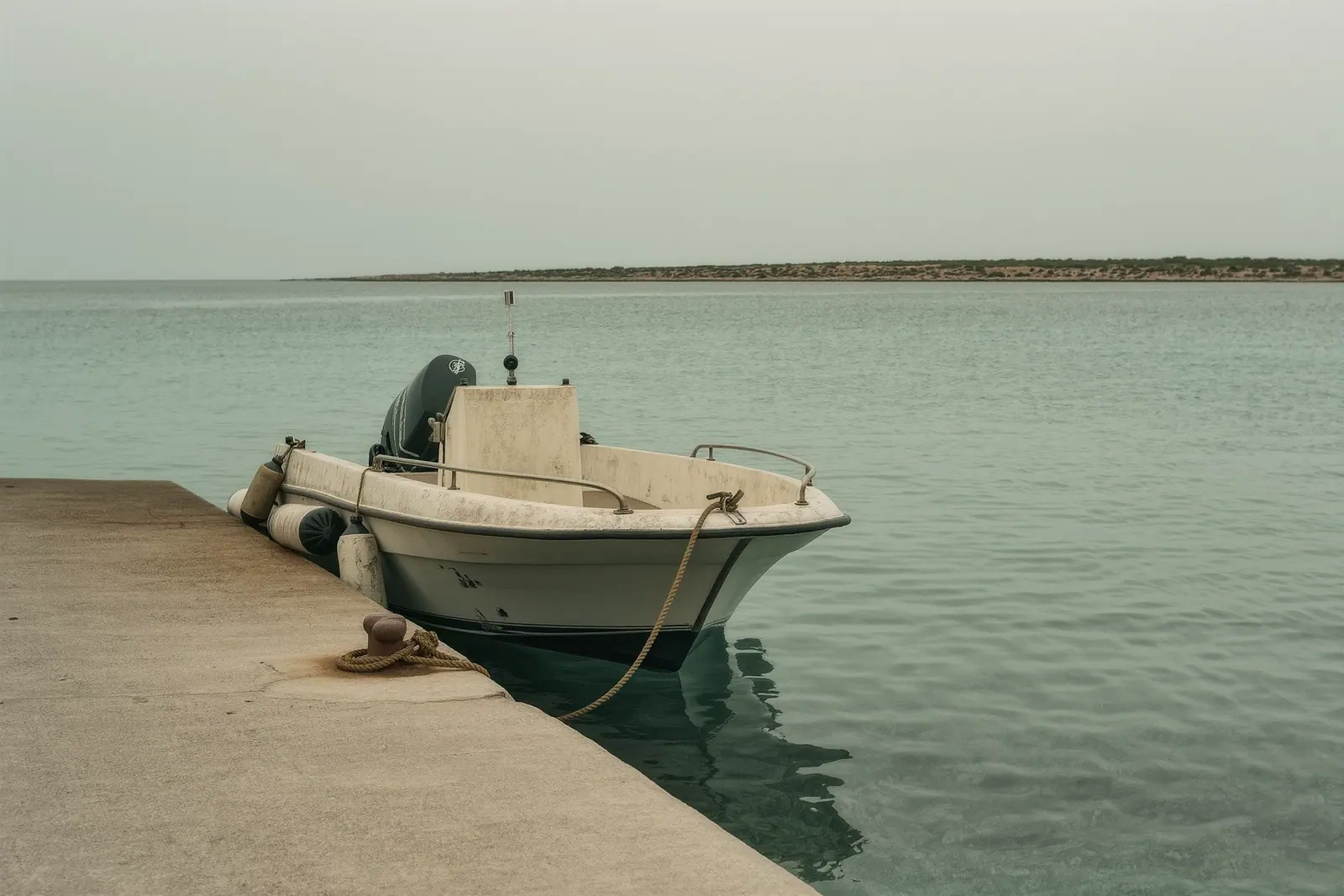
Sant Antoni bay is a wide west-facing bowl with a working harbour at the bottom of it, and it is the most straightforward place on Ibiza to get hold of a small fast boat. Several jetties, a lot of hulls, short walk-up notice outside the peak weeks. That accessibility is the reason it is also where the most rented propellers get bent.
The bay has one dominant characteristic that decides your whole day: it is open to the west, and in summer the west is where the afternoon comes from.
The wind clock
Ibiza summer weather is generally settled, which people take to mean calm. What it actually means is predictable. Overnight the air drains off the land and the bay is glass at eight in the morning. Through the late morning the sea breeze builds from somewhere between south-west and north-west, and by mid-afternoon it is doing ten to fifteen knots with a metre of short chop stacked against the inside of the bay.
| Time | Typical bay state | What it means for a small open boat |
|---|---|---|
| 08:00–10:00 | Flat, light offshore or nothing | Best hours of the day. Nobody uses them |
| 10:00–12:00 | Breeze filling from the west | Still comfortable, spray on the way out |
| 12:00–15:00 | Established sea breeze, short chop | Fine going downwind, slow and wet coming back |
| 15:00–18:00 | Peak breeze, whitecaps in the bay mouth | Small hulls should already be heading in |
| After 19:00 | Breeze eases, swell lingers | The reason sunset trips price differently |
The practical version: take the boat at nine, not at noon. Half-day hires split into a morning slot and an afternoon slot at roughly the same price, and the morning slot is worth considerably more than the afternoon one.
Where you can actually get to
From the harbour, everything worth reaching is within twenty minutes, which is the real argument for renting here rather than anywhere else on the island.
- North out of the bay: Cala Gració and Cala Gracioneta first, then Cala Salada and Cala Saladeta. Salada is the one everybody wants and it is far easier to arrive at by water than by road, where access is restricted in high summer.
- Further north: Punta Galera, the flat rock shelves below the cliffs, and then the coast hardens up towards Cap Nunó. Past that you are exposed and a long way from help in a small hull.
- West, offshore: the islets — Sa Conillera with its lighthouse, Illa des Bosc, Ses Bledes further out. Landing is restricted on the protected ones, and the channel between them accelerates the breeze noticeably.
- South: Cala Bassa first, then Cala Conta and the shallow water round the islets off it, then Cala Tarida. Conta on a flat morning is the best twenty minutes of the day.
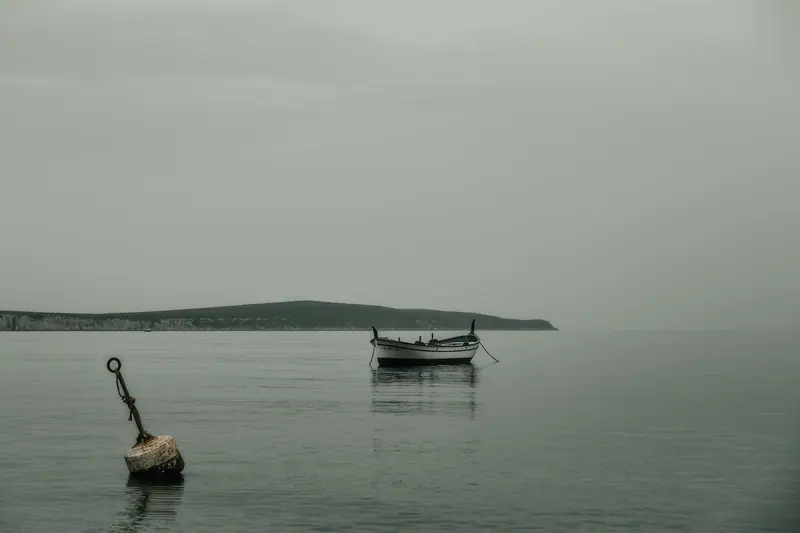
What the boat is and is not allowed to do
Every rented hull on this coast comes with a set of limits, and they are rarely printed in large type:
- A distance from shore limit, commonly a small number of miles, tied to the boat’s certification rather than to your competence.
- A daylight only clause. Most small boats must be back before dark.
- An area clause. The bay and the adjacent coast, yes. Round the island to Formentera, usually no.
- A weather clause that lets the operator cancel or recall the fleet. On this coast that clause gets used, and it is generally used correctly.
Breaching any of these voids the cover and puts the whole deposit in play, which is worth understanding properly before you sign — see what a charter deposit covers.
Licence, or no licence
The line between “walk up and take it” and “we need to see a certificate” is drawn by hull length and engine power together, and that threshold is set nationally. Rental staff will tell you which side of the line a given boat is on, and they are usually right, but they are not the authority and the rule does get revised. Ask for the numbers, then check them.
The honest trade-off is that the licence-free band is a genuine band of boats, not a token. It will carry six people and reach every cala listed above. What it will not do is punch home into a fifteen-knot breeze at any useful speed. There is a fuller treatment in licence-free boat hire.
Fuel, and the number nobody budgets
Fuel is the second bill. On most Sant Antoni hires the boat leaves full and you pay for what you use, settled at the jetty when you return. A small outboard pottering between calas uses very little. The same boat driven at full throttle for three hours can add a serious fraction of the day rate.
Two habits make the difference: cruise at the speed where the hull is just up on the plane rather than at wide-open throttle, and do the upwind leg first while the bay is still flat. Going out into wind and coming back with it saves fuel and saves everyone aboard a soaking.
What to book if you only do this once
Take a half day, morning, on the smallest boat that fits the group with room to sit down. Ask for shade. Go north to Salada first while it is empty, then south to Conta, then in before the breeze is properly up. If the group wants to be on the water at the good hour of the day rather than the convenient one, book a sunset trip instead and accept that the whole west coast is bidding against you for that slot.
What to check before you book
- Ask for the engine power in horsepower and the hull length in metres, then ask which certificate that combination requires. Do not accept "no licence needed" without those two numbers.
- Confirm whether fuel is included, prepaid or settled on return, and whether the boat is handed over full.
- Ask what the boat is allowed to do: how far offshore, whether Formentera is permitted, and whether night use is excluded.
- Photograph the propeller, the transom and the underside of the bathing platform before you leave the jetty.
- Check the boat has a bimini or any shade at all. Six hours of west-coast sun in an open boat with none of it is a medical problem, not a comfort one.
- Get the wind cancellation policy in writing — who decides, and whether you are refunded or rebooked.
Questions people actually ask
- Do I need a licence for a speedboat in Sant Antoni?
It depends entirely on the engine power and hull length, and the threshold is set nationally rather than by the rental company. Small, low-powered boats can be rented on a short briefing alone; anything genuinely fast is not in that band. Ask for the exact horsepower figure and confirm the current limit before you book, because the person on the jetty is not the authority on it.
- How much does a day cost?
A small open boat in the licence-free band typically runs from the low hundreds a day in the shoulder months, rising sharply for the first three weeks of August. Anything with real power sits well above that. Fuel is almost always extra and a fast hull used hard can add a substantial share of the hire price in one afternoon.
- What time should I take the boat out?
Early. Sant Antoni bay is usually flat until mid-morning and then the sea breeze fills in from the west, building through the afternoon. A boat that felt fast and comfortable at ten will be slamming and wet at four, and you are heading into it on the way home.
- Can I take a rented speedboat to Formentera?
From Sant Antoni, usually not, and often the contract says so explicitly. It is a long run round the south of the island in an open boat, the Es Freus channel is shallow and busy, and most west-coast operators restrict their small hulls to the bay and the nearby coast. Ask before you plan the day around it.
- Is a licence-free boat fast enough to be fun?
It planes, it will do a comfortable cruising speed in flat water, and it will get six people to a cala in twenty minutes. It is not fast in the way the photographs suggest. If the point of the day is speed rather than reaching places, you will be disappointed by the boat and pleased by the bill.