PlacesIbiza
The changing rules on private parties in rented Ibiza villas
May–Oct
Private parties in rented villas are the most heavily policed part of the Ibizan rental market, and the framework has been rewritten more than once. What has driven the tightening, who actually carries the risk, how enforcement tends to arrive, and the questions that give you a truthful answer about a specific address.
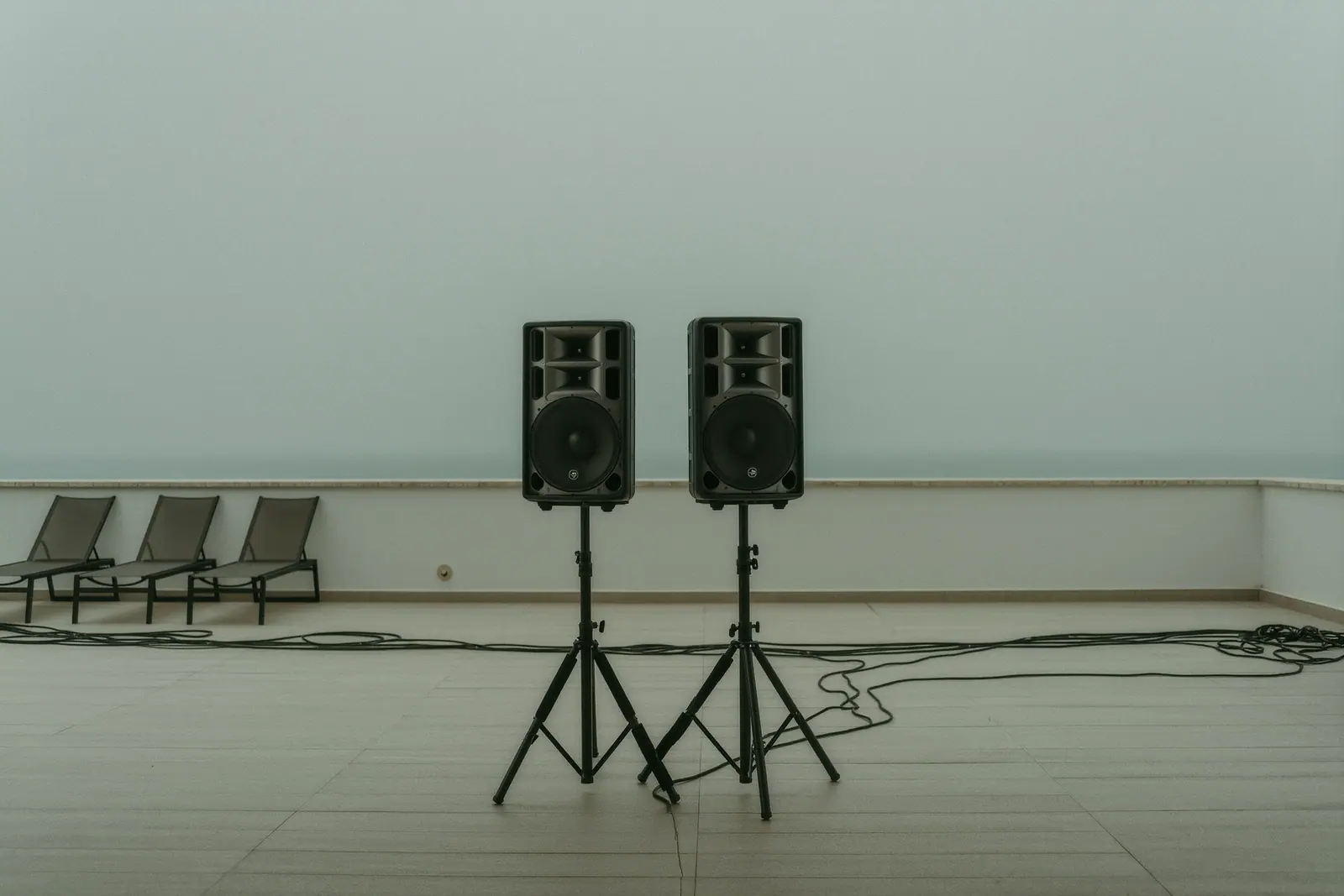
Two houses on the same west-coast slope in August. One has twenty-eight people around a long table, a playlist through a small speaker inside the open doors, and everyone gone by one. The other has ninety, two speaker stacks pointed at the valley and a car parked on the verge every twenty metres for half a kilometre.
Only one of these gets a visit. Nobody living here is confused about which.
Why this is the most regulated corner of the market
Ibiza has spent two decades absorbing a specific problem: houses in residential and rural zones operating, in effect, as venues. Amplified music until dawn in areas zoned for nothing of the kind, no licence, no capacity limit, no fire or safety oversight, and neighbours with no recourse except the police.
The Balearic response has been to legislate repeatedly and to publicise enforcement. Successive rounds have targeted advertising of unlicensed party rentals, the properties themselves, and the promoters organising them, with fine bands set high enough to be a deterrent rather than a cost of doing business. The detail has changed more than once and will change again, which is precisely why nothing in this piece should be treated as the current text of anything. Check with the relevant town hall or an event manager who works here every summer.
What actually distinguishes a dinner from an event
There is no single switch. What officials, owners and neighbours all react to is a cluster of signals, and the more of them you have, the further you are from “private stay”.
| Signal | Reads as a private stay | Reads as an event |
|---|---|---|
| Headcount vs registered occupancy | At or near it | Several times it |
| Music | Indoors, background, no rig | Outdoor stacks, a booth, a DJ billed |
| Finish | Before the small hours | Later, and audible |
| Entry | Friends, no money | Tickets, a list, a fee, a bar |
| Promotion | A group chat | A public post or a flyer |
| Suppliers on site | A cook | Crew, security, staging, a generator |
| Parking | On the property | Along a public lane |
The row people underestimate is promotion. A public invitation converts a private gathering into something that can be identified, planned for and attended before it happens. Private stays that got into difficulty almost always advertised.

Who carries the risk
Three parties, and the split is not intuitive.
The owner carries the property-level exposure. It is their address, their registration and their relationship with the town hall, and it is their listing that gets pulled.
The organiser carries the event-level exposure. If you rented the house, invited the people and hired the sound, that is you, whatever you call yourself. Bringing in a promoter does not automatically move this; it can add a second liable party rather than replace the first.
The guest who simply attended carries very little, which is why enforcement does not target them and why the person holding the contract should not assume the group shares the problem.
Between owner and organiser sits the bond. On any property that entertains the idea of an event, expect a separate event deposit well above the normal damage deposit, held against exactly this. Ask what it can be drawn against — in some contracts it covers fines levied on the owner as a result of your evening.

Getting a truthful answer about your house
Owners give vague answers because a vague answer protects them. Force specificity with questions that have numbers in them.
- Is this property registered for accommodation only, or does it hold anything further? See what a rental licence number tells you for why those are separate.
- What is the maximum number of people permitted on site at one time, including staff?
- At what time must amplified sound stop, and at what time must guests leave?
- Has an event been held here before, and did anyone complain?
- Which town hall, and has anyone spoken to them this season?
An owner who answers all five plainly is worth booking. An owner who says “it is fine, everyone does it” is describing a risk they intend you to carry.
The realistic options if the answer is no
It usually is, for anything above about forty people with amplified music. The workable alternatives, in rough order of how often they succeed here:
- Move the loud part to a licensed venue and keep the villa as the house. The trade-offs are set out in private venues and what “event permitted” means.
- Keep the event and shrink it: a seated dinner, acoustic or low-level sound, finished early enough that nobody has anything to report.
- Take the whole thing onto the water for the afternoon and come back to a quiet house for dinner.
- Book a property whose owner genuinely holds event capability, and pay the premium and the bond that come with it.
What does not work is booking a normal villa, planning a party quietly, and hoping. The island is small, the lanes are narrow, and the neighbour who calls has been calling for fifteen years.
What to check before you book
- Ask the owner directly whether the property is registered for accommodation only. Most are, and that is the whole answer.
- Get any event permission in writing, tied to your date, your headcount and your finish time.
- Ask who else lives within earshot and how far away. Sound carries a long way over open slopes here.
- Read the villa contract for the clause on additional persons. Day visitors count in most of them.
- Establish whether any promoter, ticket, entry fee or public invitation is involved. That changes the category entirely.
- Confirm your event bond, when it is released and what it can be drawn against.
- Verify the current position with the relevant town hall or a local event manager rather than with last year’s experience.
Questions people actually ask
- Are villa parties illegal on Ibiza?
A private gathering in a house you have lawfully rented is not in itself unlawful. What is targeted is the commercial or quasi-commercial party: amplified music beyond permitted limits, headcounts far above the registered occupancy, entry fees, promotion, and properties effectively operating as unlicensed venues. The line between a large dinner and an event is where the trouble lives, and it is drawn locally.
- What are the penalties?
The Balearic framework has provided for very substantial fines for unlicensed party activity, aimed at owners, organisers and promoters, and enforcement campaigns have been publicised most summers. Exact figures and categories have been amended repeatedly, so do not rely on a number you read somewhere. Assume the amounts are large enough to make the question worth asking properly.
- How does enforcement usually turn up?
Almost always because someone complained. Local police attend, ask for the person responsible, and in the first instance normally require the sound to stop. A second visit is a different conversation. Officers also work from advertising, so a party with a public invitation or ticket link is far more likely to be identified before it starts than a private dinner is.
- Does the villa agency carry any of this?
Reputable agencies write the prohibition into the contract precisely so that they do not. Expect a clause banning events, a clause on additional persons, and a bond that can be drawn against. If an agency is casual about all three, that is a signal about the agency rather than about the rules, and it usually means the risk has been passed to you quietly.
- We only want a birthday dinner for thirty. Is that a problem?
Usually not, if the house sleeps a reasonable proportion of them, there is no amplified music outside beyond background level, cars are parked sensibly and it finishes at a civilised hour. Tell the owner anyway. Owners who are told say yes far more often than owners who find out, and the ones who say no have generally been burned already.