PlacesIbiza
Private venues on Ibiza and what "event permitted" really means
May–Oct
A villa advertised as event permitted is making a narrow claim, and it is rarely the claim renters think they are reading. What separates a house that tolerates a dinner from a venue licensed for a gathering, which permissions belong to the owner and which to you, and how to establish the difference before deposits move.

The listing says “events permitted”. Underneath, in the same paragraph, it says “no parties”. Both sentences were written by the same person and neither is a mistake. They mean the owner will accept a seated dinner for thirty with a guitarist, and will not accept a hundred people and a sound system.
Nothing in that listing is a permission. It is a preference. The distinction is the whole subject.
Three different things called the same word
| What you are looking at | What it actually is | What you still need |
|---|---|---|
| Villa, owner tolerates gatherings | A contractual permission from a landlord | Everything municipal |
| Villa marketed for events | Owner has done this before, may hold paperwork | Confirmation for your date and headcount |
| Licensed private venue | A business licensed for the activity | Usually only your own suppliers and insurance |
| Agrotourism or estate with a function room | A hospitality operation | Their terms, their preferred suppliers |
Most disappointment lives in row two. An owner who has hosted six events says yes, honestly, on the basis of experience. Experience is not a permission, and what was accepted in one season is not automatically accepted in the next.
Five municipalities, five positions
Ibiza is divided into Eivissa, Santa Eulària des Riu, Sant Antoni de Portmany, Sant Josep de sa Talaia and Sant Joan de Labritja. Event permissions, noise limits and the treatment of gatherings at private houses are matters where the municipality has a substantial say, and they have not historically taken identical positions or enforced with identical energy.
That is why the first question is not “can we have a party” but “which town hall are we in”. A house four kilometres from another house may sit under a different administration with a different appetite. Anyone giving you an island-wide answer is guessing.
Assume nothing is transferable and verify with the town hall for the specific address, or through a local event manager who deals with that office regularly. Positions change between seasons, sometimes sharply.

The four numbers that define an event here
Everything else is detail. Get these in writing, from the owner, ideally with their town hall position behind them.
- Headcount. Not the villa’s sleeping capacity — the number of people permitted on site at once, including staff and suppliers. Crew count towards almost every threshold that matters.
- Finish time. The hour at which amplified sound stops, and separately the hour at which the event ends. These are frequently different, and the first is earlier than groups expect.
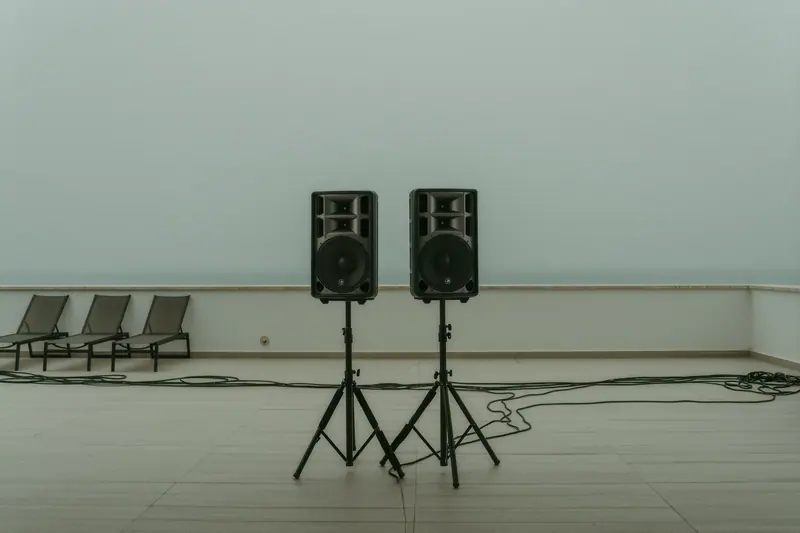
- Sound. Whether amplified music outdoors is permitted at all, at what level, and whether a limiter is required. That is its own subject, covered in what a rented sound system may legally do.
- Access and parking. Where sixty cars go on a rural lane, and whether the supplier lorry can physically reach the terrace. Marquee and staging trucks need turning space that a dirt camí often does not have.
Why a dedicated venue is often the cheaper answer
Groups start from the villa because they have already paid for it. Then they add a marquee, a generator, staging, portable toilets, extra parking marshals, a sound system with a limiter, additional insurance and a security presence, and somewhere around fifty guests the total passes what a licensed private venue would have charged.
A venue that operates as a venue has solved power, drainage, access and its relationship with the town hall. It has a capacity written down. It has hosted the neighbours’ complaints already and knows the answer. What it costs you is the hire fee and the loss of the idea that the party happens at your house.
Between the two sit properties that are effectively both: rural estates and agrotourism properties with function space, which come with their own rules and often their own supplier list. Read that list carefully — it can rule out the marquee and staging hire you had already priced elsewhere.
The clause nobody puts in the contract
If a permission is refused or withdrawn, what happens to your money?
Villa contracts routinely say nothing about this, which means the default applies and the default is that you have rented a house and the party is your problem. On an event of any size, ask for a written position: refusal of permission by the authority, and what portion is refundable or transferable.
Ask the same question about neighbours. A property with a history of objections will have a shorter finish time in practice than on paper, because the second visit from the local police is different from the first.
Insurance is the other omission. Public liability cover for an event at a private house is not automatic, is rarely included in the villa contract, and is occasionally a condition of any permission granted. Suppliers carry cover for their own equipment and their own crew, which is not the same as cover for a guest who trips on an unlit step. Ask who holds the policy, at what level, and whether the property owner needs to be named on it.
The single most useful thing you can do is engage someone who works on this island every summer and let them talk to the town hall. It costs a fee and it converts a series of guesses into a set of answers — including the answer, on some addresses, that the honest position is no.
What to check before you book
- Ask which municipality the property sits in and whether the owner has spoken to that town hall about your specific date.
- Get the permitted headcount, the permitted finish time and the amplified-music position in one written line each.
- Establish who applies for any permission — owner, planner or you — and by what date the application must be in.
- Ask what happens to your money if a permission is refused. That clause is often missing entirely.
- Confirm whether public liability insurance is required, at what level, and in whose name.
- Ask whether neighbours have objected to events at this property before, and what the outcome was.
- Verify all of it with the town hall or a local event manager. Positions here change between seasons.
Questions people actually ask
- What does "event permitted" mean on an Ibizan villa listing?
At its narrowest it means the owner will not object to a gathering, which is not the same as the gathering being lawful. A genuinely event-capable property is one where the owner can point to a municipal position on their address, a headcount, a finish time and a sound arrangement. Ask which of those two things you are being sold, because listings use the same phrase for both.
- Who is responsible if a private party is shut down?
Practically, the owner and the organiser both are, and the guest paying for the house is usually the organiser whether or not they think of themselves that way. Enforcement here has increasingly targeted the property and the person promoting or hosting the event. If a planner is engaged, agree in writing which of you carries that role.
- Are dedicated private venues easier than villas?
Generally yes, because a venue that operates as a venue holds a licence for the activity, has an established relationship with its town hall, and has power, parking, toilets and access already solved. It costs more than using the villa you have already paid for, and it removes most of the ways an evening goes wrong. For anything over about fifty people, it is usually the cheaper answer once you total the hire.
- How far ahead do event permissions need arranging?
Months, not weeks, and earlier than the villa booking would suggest. Municipal processes have their own timetables, technical documentation may be required, and August is the worst possible month to be asking anyone in local government for something quickly. Six months out is comfortable; six weeks out generally means the answer is no.
- Can we hold a wedding at a rented villa on Ibiza?
Ceremonies and receptions at private houses do happen here, but they sit on top of the ordinary event framework rather than beside it, and the legal marriage itself is a separate process again. Most people who succeed use a local planner who knows which municipality is workable and which is not. Confirm the position for your specific address before you send invitations.