On the waterIbiza
A day charter to Formentera, and the Es Freus crossing
May–Oct
Almost every day boat leaving Ibiza in July is pointed at the same stretch of sand on Formentera. The crossing is short and the water is famous, but Es Freus is shallow, busy and regulated, and the return leg is the part that goes wrong. What the day actually looks like, hour by hour, and what it costs to get it right.
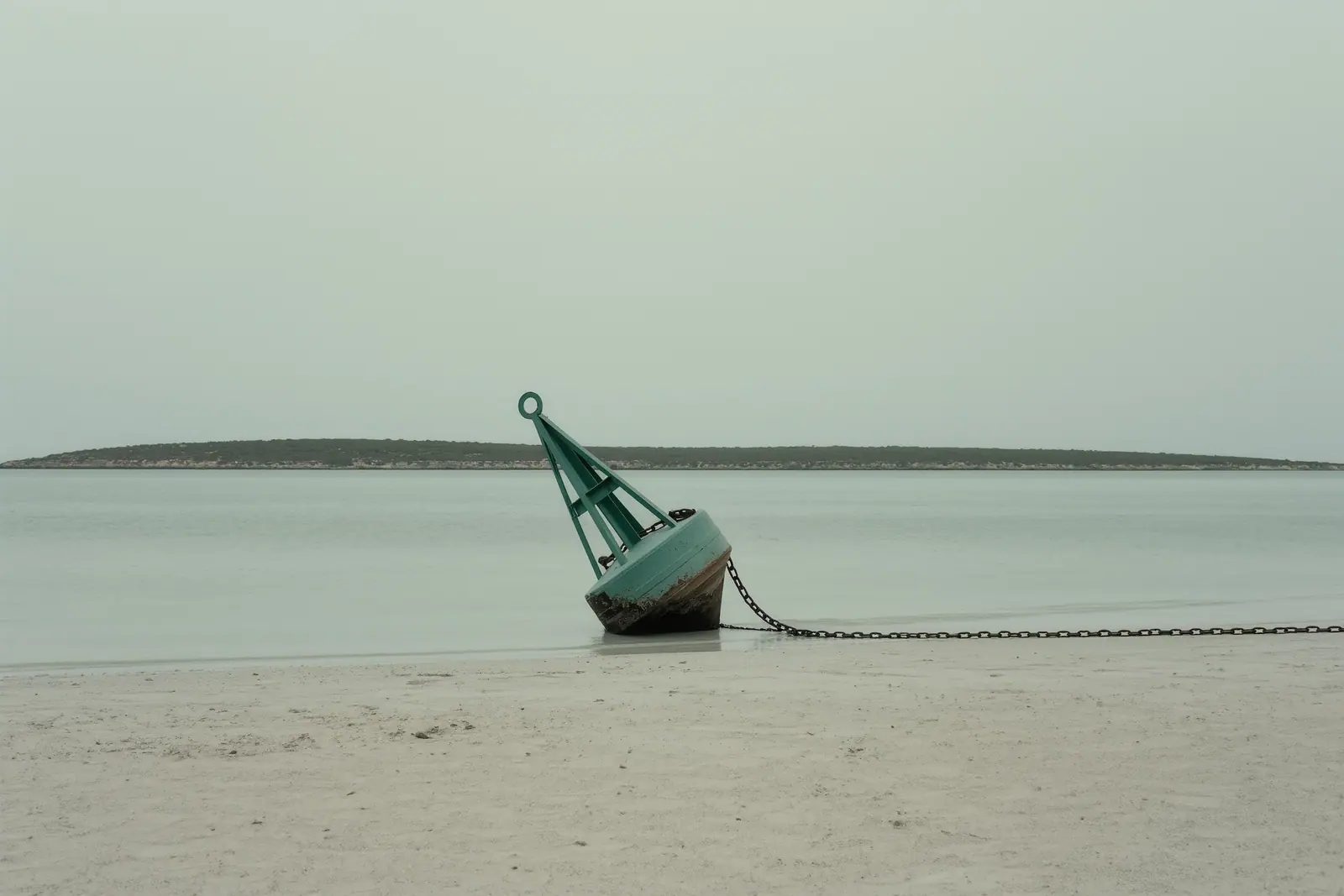
The Es Freus channel is about three miles of pale water between the southern tip of Ibiza and the sandbanks off Formentera, and on a Saturday in August something in the order of a thousand boats cross it. The distance is nothing. The day still goes wrong more often than any other day charter sold on this island, and almost always in the same two ways: the group leaves too late, and the group comes back too late.
This is a piece about the timings and the rules, not about how blue the water is. You already know how blue the water is.
The crossing, in the order it happens
A Formentera day out of Ibiza town or Santa Eulària runs to a shape. Deviate from it and you spend the good hours in transit.
- Handover, 09:00–10:00. Paperwork, deposit, the safety brief and the fuel reading. Budget forty minutes even when you are told twenty.
- Out past Botafoc and south. You clear the harbour entrance, leave the Freus islets to port, and cross. Forty minutes on a planing boat, two hours plus under sail.
- Anchor or pick up a buoy, 11:00–12:00. The good spots on the north side are taken by mid-morning in season. Arriving at one is not a plan.
- Four hours on the sand. This is the part you paid for.
- Turn back at the agreed hour. For most charters that is 16:00 or 17:00.
- Return, refuel, hand back. The return check is quicker than the handover, but only if the boat comes back clean and full.
The single biggest improvement anyone can make to this day is moving the start forward by an hour. The anchorages fill in order of arrival, the wind is lightest before noon, and the crossing in the other direction gets steadily worse all afternoon.
Why Es Freus is not just open water
The channel is shallow. Wide areas carry only a few metres, the bottom is sand and seagrass in a mosaic rather than a clean split, and the islets in the middle — Espalmador, Espardell, the smaller rocks between them — narrow the usable water considerably. It is buoyed, it is well charted, and it is still not a place to navigate by eye at speed.
Two things follow for a rented boat. First, the marked channel exists for a reason and the shortcut across the bank is where rented propellers meet sand. Second, shallow water builds a short steep sea very quickly once the afternoon breeze arrives, typically from the south-west or west in summer. Ten knots feels like nothing in Ibiza harbour and like a different day in the middle of Es Freus.
Where you can actually stop
| Where | What it is | What to know |
|---|---|---|
| Northern spit, Ses Illetes side | The postcard sand, shallow and sheltered from the west | Inside the natural park. Protected seabed, controlled zones, daily charges in places |
| Espalmador, southern bight | Sand between Ibiza and Formentera, quieter than Illetes | Also protected. Landing rules on the island itself are restricted and change |
| Es Pujols, east side | Village frontage, easy for lunch ashore by tender | Exposed to anything with east in it |
| Cala Saona, west coast | Cliffs, small beach, good in an easterly | Small, and full by noon in August |
| La Savina, the port | A berth rather than an anchorage | Rarely available to a day boat in high season |
The whole southern end of Ibiza and the northern end of Formentera sit inside one protected area, which is the fact that governs the day. It is not a formality. There are patrol boats, there are zones where you may not anchor at all, and there are buoy fields where the charge is per day and per length band. Rules and prices are revised, so make your operator tell you what applies this season and who is paying it. More on the seabed itself in anchoring over posidonia.
The turn-back hour, which is the actual discipline
Charter days are sold as eight hours and the return time is a hard edge. Late fees are usually charged by the started hour and they are not small, because the boat frequently has an evening booking behind yours.
Work backwards. If handback is 18:00, the boat needs fuel by 17:30, which means alongside the fuel berth by 17:15, which means leaving Formentera by 16:15 on a fast boat and closer to 14:00 on anything that sails. Say that number out loud at eleven in the morning while everyone is still cheerful.
What it costs, in ranges
A small open motorboat for six, self-drive with a certificate, typically runs a few hundred euros a day in the shoulder months and roughly double that in the first three weeks of August. A skippered day boat for eight to ten sits in the mid hundreds to low thousands depending on size, with the skipper charged separately more often than not. Fuel is nearly always on top and is the number people forget: a planing boat crossing twice can drink a meaningful fraction of the hire price in a single day.
A catamaran for a group prices higher per day and lower per person once you pass about eight people, and it is the more comfortable platform for exactly this trip because its draught lets it sit closer in over sand.
The thing most people get wrong
They treat Formentera as the destination and Ibiza as the car park. On a day charter the two coasts are one trip, and the smarter version stops on the way. The south-west corner of Ibiza — Es Torrent, Cala Llentrisca, the water under Es Vedrà — is twenty minutes off the direct line and empties out the moment the Formentera boats have gone past. If the forecast turns easterly, that corner is also your plan B, and it is worth agreeing before you leave the berth which version of the day you are on. Whether you leave from Ibiza town or Santa Eulària changes that calculation by about an hour in each direction.
What to check before you book
- Ask whether the quoted day actually includes the crossing. Some contracts cap you inside Ibizan waters and charge a supplement for Formentera.
- Confirm the fuel arrangement before you leave. On a planing boat the return leg into a headwind can burn half again what the outbound leg did.
- Get the return time in writing and ask what the late fee is per hour. It is usually charged in whole hours, not minutes.
- Ask which mooring or anchoring permits the operator holds for the natural park area, and who pays the daily charge.
- Check that the boat carries a working chart plotter with current cartography for Es Freus, not a phone in a waterproof pouch.
- Agree the turn-back hour with the skipper at the start of the day, before anyone has had lunch.
Questions people actually ask
- How long does it take to get from Ibiza to Formentera by rented boat?
From the mouth of Ibiza harbour to La Savina is roughly ten to twelve nautical miles, so a planing motorboat doing twenty knots needs about forty minutes in flat water. A sailing yacht or a cruising catamaran should be given two to three hours each way. Add time in the afternoon, because the sea breeze usually makes the return slower than the outbound run.
- Can I anchor off Ses Illetes on a day charter?
Only in the places and in the way the natural park allows, which changes and is enforced in season. Large parts of that seabed are protected seagrass, there are buoy fields with a daily charge in some zones, and patrol boats do move people on. Ask your operator which permits they hold and treat any advice that ignores the park as a reason to book elsewhere.
- Do I need to clear in anywhere on Formentera?
No. Formentera is part of the same country and the same island group, so a day trip involves no formalities at all if you stay at anchor. If you want a berth in La Savina you deal with the port in the normal way, which in July means calling well ahead and usually being told no.
- Is the crossing rough?
Es Freus is shallow, which makes it steep and short rather than big. In the morning it is often glass. From late morning the breeze fills in and the chop builds against you on the way home, and a small open boat that was comfortable at nine can be genuinely wet at five. That asymmetry, not the distance, is what catches people out.
- Is it cheaper to take the ferry and hire a boat there?
It can be, but you lose the reason to go. A charter day gets you to water the ferry route never touches, and Formentera boat hire is a smaller market with less choice. If the sand is the whole point and nobody in the group wants to be on a boat for three hours, the ferry is honestly the better buy.